In the increasingly competitive sheet metal processing industry, product precision directly determines market value. Have you ever been troubled by burrs and slag residue after laser cutting? Subsequent tedious grinding and polishing processes not only increase labor and time costs but may also scratch workpieces if handled improperly, leading to reduced yield rates and delivery delays.
Achieving high-gloss cut surfaces with “one-click cutting, no secondary processing” is within reach. This guide systematically explains how to eliminate burrs and comprehensively enhance cutting quality by optimizing core process parameters.
I. Root Causes: Where Do Burrs and Slag Residue Originate?

Simply put, burrs and slag residue are molten material left behind when not fully vaporized or blown away during cutting. The fundamental cause lies in an imbalance between “energy” and “gas”:
- Insufficient energy/excessive speed: Material fails to melt completely and is forcibly “pushed” out by the cutting gas, forming bottom burrs.
- Inadequate Auxiliary Gas: Insufficient pressure or purity prevents timely and thorough removal of slag from the kerf.
- Focus Misalignment: Laser energy fails to precisely target the optimal material position, resulting in insufficient energy density.
II. The Art of Optimizing Four Core Parameters
To achieve flawless cuts with minimal burrs, slag, and a smooth cross-section, you must orchestrate these four core parameters like a symphony conductor.
1. Laser Power: The Source of Energy
Principle: Higher power isn’t always better; it must match the cutting speed.
Optimization Strategy: When pursuing high-speed cutting, sufficient power must be provided to ensure complete vaporization of the material. Insufficient power leads to incomplete melting, causing slag adhesion; excessive power risks overburning, resulting in rough cross-sections.
2. Cutting Speed: The Balance Point Between Efficiency and Quality
Principle: Speed and power are inversely proportional.
Optimization Strategy: Excessive speed reduces energy input, inevitably causing bottom burrs. Insufficient speed leads to excessive energy input, resulting in material burn-through, wider kerfs, and reduced efficiency. The optimal speed is precisely where the material is cut through while forming uniform, fine-grained striations on the cross-section.
3. Auxiliary Gas and Pressure: The “Cleaning Crew” for Cross-Sections
Gas Type:
- Carbon Steel: Must use oxygen (O₂). Oxygen participates in exothermic reactions, increasing energy input and oxidizing molten material for improved fluidity and easier removal.
- Stainless Steel/Aluminum: Must use nitrogen (N₂). As an inert gas, nitrogen prevents material oxidation. High pressure blows away molten material, creating an oxidation-free, smooth silver-white cross-section.
Gas Pressure Control:
- Oxygen (cutting carbon steel): Requires relatively low pressure, primarily for combustion assistance and slag removal.
- Nitrogen (cutting stainless steel/aluminum): Requires extremely high pressure (typically 15-25 Bar) to ensure sufficient kinetic energy for thoroughly blowing away highly viscous molten metal (especially aluminum) from the kerf. Insufficient pressure is the primary cause of slag adhesion when cutting stainless steel and aluminum.
4. Focus Position: Finding the Sharpest “Lightsaber”
Principle: Focus position determines laser energy distribution across material thickness.
Optimization Strategy:
- Carbon Steel: Focus typically positioned at or slightly below the plate surface (-1mm) to ensure sufficient energy for oxidation reactions.
- Stainless Steel/Aluminum: The focus is typically positioned within the plate (e.g., 1/3 to 1/2 of the plate thickness) to achieve the narrowest kerf and highest energy density, facilitating slag removal by high-pressure nitrogen.
- Minor adjustments to the focus are critical fine-tuning methods for improving cross-section roughness and reducing bottom burrs.
III. Customized Optimization Strategies for Different Materials
1. Carbon Steel: Utilizing Oxidation Reactions
Core Principle: Oxygen purity must be ≥99.95%, paired with moderate power and speed settings.
Slag Buildup Countermeasures: If bottom slag occurs, try slightly increasing gas pressure or reducing cutting speed.
2. Stainless Steel: Relying on High-Purity Nitrogen and High Gas Pressure
Core: Nitrogen purity ≥99.999% (recommended), gas pressure must be sufficiently high.
Slag Adhesion Countermeasures: For minor nodular slag adhesion at the bottom, first check nitrogen pressure and purity; secondarily, slightly adjust the focus downward or appropriately increase power.
3. Aluminum & Alloys: Challenges and Solutions
Challenges: High reflectivity, high thermal conductivity, and high molten material viscosity.
Strategy:
- High-power lasers and ultra-high-pressure nitrogen (specialized nozzles may be required) are essential.
- Focus control demands greater precision, typically requiring a more negative focal position.
- Surface cleanliness is critical; oil or water contamination severely compromises cutting quality.
IV. The Cornerstone of Consistent High-Quality Cross-Sections: An Exceptional Laser Cutting Machine
However, even the most perfect process parameters rely on a stable, precision-reliable laser cutting machine as the foundation. The accuracy of parameter execution, stable gas supply, and beam quality directly determine the success of optimization.
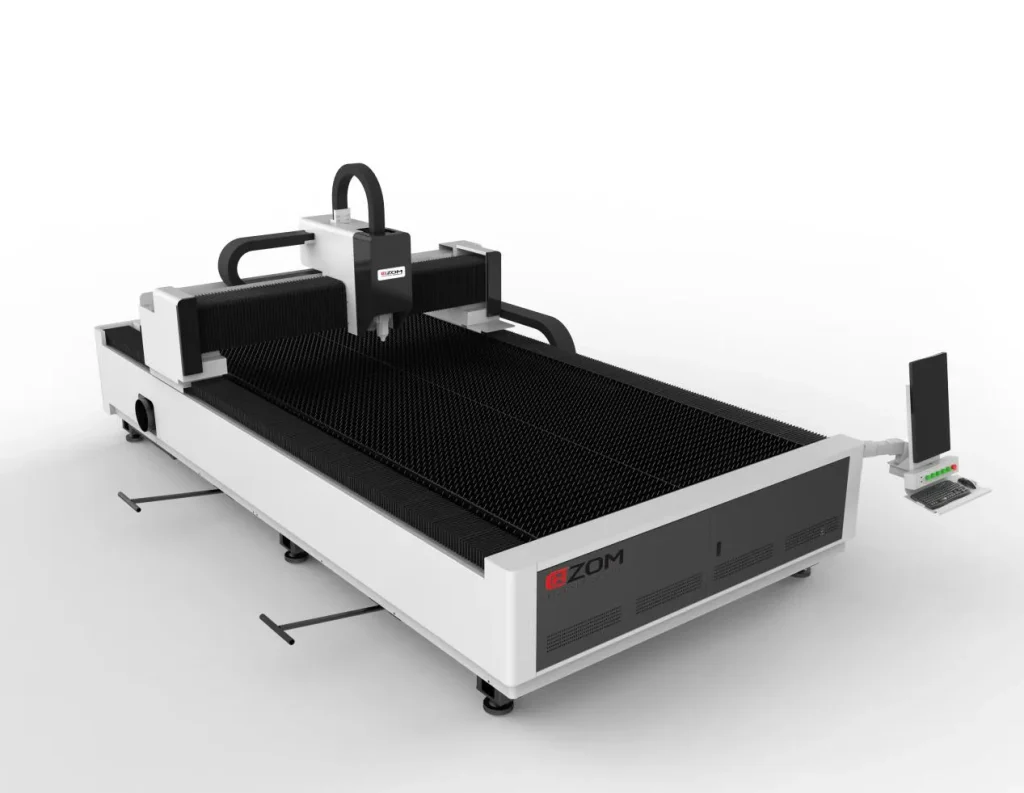
In this regard, CHZOM deeply understands the value of stability. Our CHZOM laser cutting machines ensure cutting quality from the source:
High-Performance Laser Source: Delivers stable, superior beam quality, ensuring concentrated energy and high efficiency.
Intelligent Gas Control System: Precisely regulates gas pressure and switching, guaranteeing gas conditions match your specifications for every cut.
Robust Bed Structure & High-Precision Drive System: Ensures dynamic stability during high-speed cutting, preventing surface defects caused by vibration.
Mature Process Database: Preloaded with validated cutting parameters for diverse materials, providing an optimized starting point and significantly reducing debugging time.
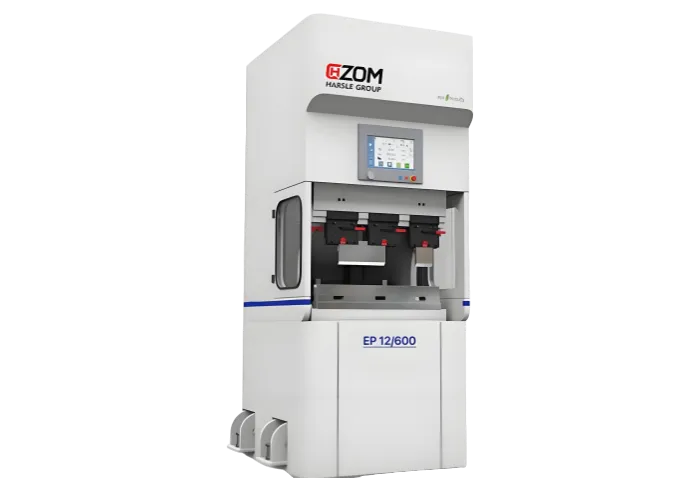
CHZOM not only delivers reliable laser cutting equipment but also offers comprehensive solutions covering the entire sheet metal processing workflow—from press brakes and hydraulic presses to punch presses. We are committed to being your trusted partner in elevating manufacturing quality and efficiency.

Say goodbye to burrs—it’s a journey of exploring the balance between precision and stability. By systematically optimizing power, speed, gas flow, and focus, and leveraging stable equipment like CHZOM, you can minimize secondary processing costs. Achieve silky-smooth cut surfaces that become your product’s core competitive advantage.