Driven by the dual trends of lightweighting and high strength in high-end manufacturing sectors like aerospace and new energy vehicles, high-strength steel (HSS) and aluminum alloys have become regulars in sheet metal workshops. However, these materials present unique challenges to traditional processing techniques: High-strength steel is a tough guy who “would rather break than bend,” exhibiting significant springback and causing rapid mold wear. Aluminum alloy, on the other hand, is a gentleman who is “soft on the outside but tough on the inside,” featuring a soft texture, susceptibility to tool sticking, and a surface that scratches easily.
Mastering these “tough nuts to crack” has become essential for process and materials engineers, serving as the cornerstone for manufacturers advancing into high-end markets.
I. High-Strength Steel: The Battle Against “Springback” and “Wear”
High yield strength is the root cause of high-strength steel’s machining difficulty.

Processing Challenges:
Significant Springback: During bending, the immense energy stored within the material causes the workpiece to revert to its original shape after pressure release, making angle control difficult.
Rapid Die Wear: High strength demands exceptionally high hardness and wear resistance from dies, resulting in extremely short service life for standard dies.
High Tonnage Requirements: Bending plates of the same thickness requires far greater pressure than for ordinary low-carbon steel.
Countermeasures:
Die Selection: High-quality, high-hardness dies are essential. We recommend CHZOM professional-grade high-strength steel bending dies, crafted from premium alloy steel with specialized heat treatment. These dies offer exceptional wear resistance and fatigue strength, effectively withstanding high-strength steel impacts. They significantly extend die life and ensure stable bending angles.
Bending Process Adjustments:
Small Angle Method: Compensate springback through incremental bending. Multiple test bends are required to determine precise compensation values.
Reduced Die Opening: Use dies with smaller V-groove openings to increase pressure per unit area, overcoming springback.
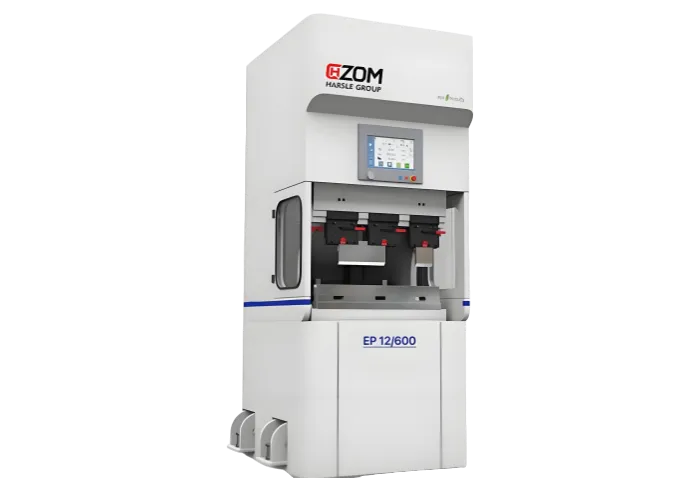
Apply Sufficient Pressure and Hold Time: Ensure complete plastic deformation of the material. The CHZOM Electro-Hydraulic Synchronous Press Brake, equipped with high-precision pressure control and a rigid frame, delivers stable, consistent force throughout the bending process. Combined with adjustable hold time, it is the ideal solution for addressing springback in high-strength steel.
Laser Cutting Techniques:
Employ high-speed bright cutting with nitrogen or air at elevated pressure to prevent oxidation.
Optimize focal position and cutting parameters to ensure smooth cross-sections and minimize post-processing cleanup.
II. Aluminum Alloys: Addressing “Tool Clogging” and “Surface Scratches” with Precision
Aluminum alloys are soft and ductile yet exhibit high thermal conductivity, presenting unique processing challenges.

Processing Challenges:
Tool adhesion and built-up edge: During cutting or bending, aluminum chips readily adhere to tool or die surfaces, forming built-up edges that cause surface scratches and poor finish.
Surface susceptibility to scratches: The soft surface of aluminum is highly prone to scratches and indentations during handling and processing.
Bending Cracks: Certain alloy series (e.g., 6061, 2024) are prone to cracking on the outer side when bent with excessively small radii.
Countermeasures:
Die Selection and Treatment:
Polishing and Coating: The forming area of bending dies must undergo mirror polishing or utilize specialized coatings (e.g., Teflon coating) to significantly reduce friction coefficients and prevent chip adhesion.
Specialized Die Design: Employ sharper die edges to facilitate material flow. CHZOM’s dedicated aluminum alloy bending solutions include dies with specialized surface treatments that effectively eliminate “stick-to-die” issues and perfectly protect workpiece surfaces.
Bending Process Adjustments:
Slow Forming: Appropriately reduce bending speed to allow sufficient material flow time, minimize stress concentration, and prevent cracking.
Increased Bending Radius: A larger relative bending radius (R/t) is required compared to steel.
Flexible Medium Usage: Placing specialized polyurethane spacers in the lower die’s V-groove or using roll-equipped dies completely eliminates hard contact between the die and workpiece surface, effectively preventing scratches.
Laser Cutting Techniques:
Aluminum alloys exhibit high laser reflectivity, requiring higher-power lasers for efficient cutting.
High-purity auxiliary gas (typically nitrogen) must be used at extremely high pressure to blow away molten metal, achieving a bright, oxidation-free cut surface. The CHZOM high-power fiber laser cutter, equipped with intelligent piercing and an expert parameter database, effortlessly handles aluminum’s high reflectivity. It delivers high-speed, high-quality, burr-free cuts, providing perfect blanks for subsequent bending operations.
Comprehensive Protection Requirements:
From sheet metal to finished product: Use protective film or isolation paper throughout the entire process.
Workshop Environment: Maintain cleanliness of workbenches, material racks, and floors to prevent hard particles from scratching workpieces.
Operator Procedures: Personnel must wear clean gloves and use non-marking lifting devices for handling.
III. Conclusion: Systematic Solutions Are the Key to Success
Conquering high-strength steel and aluminum alloys cannot be achieved through isolated improvements. It requires a systematic solution covering the entire process from blanking and bending to forming. This includes:
High-rigidity equipment: Handling the high tonnage demands of high-strength steel while ensuring stability in aluminum alloy processing.
Specialized dies and accessories: Tailored solutions addressing the unique properties of each material.
Precision process parameters: Fine-tuned and optimized through data analysis and experience.
Comprehensive quality awareness: Integrating quality control into every operational detail.
As a trusted partner in sheet metal processing, CHZOM deeply understands these challenges. We not only provide a full range of equipment—from heavy-duty hydraulic presses and high-precision punching machines to high-performance laser cutters and intelligent bending machines—but also commit to delivering comprehensive solutions including process consulting, tooling selection, and technical training. Choosing CHZOM means acquiring a set of powerful tools to tackle the toughest challenges, paving a solid path of technology and equipment for your company’s advancement into high-end manufacturing.