For small and medium enterprises (SMEs) across the manufacturing sector, a classic and critical decision-making dilemma frequently arises in the production process: When sheet metal parts are required, should the company invest heavily in purchasing equipment and establishing production lines, or should it outsource all such work to specialized external sheet metal fabrication factories?
The answer to this choice is not fixed and profoundly impacts a company’s cash flow, core competitiveness, operational efficiency, and risk resilience. This article systematically compares the advantages and disadvantages of the “buy” (vertical integration) and “outsource” (specialized division of labor) models, providing a practical decision-making framework to help enterprises identify the most suitable development path for their specific circumstances.
I. In-House Equipment Acquisition: Balancing Control and Long-Term Costs
Opting for in-house equipment acquisition means firmly maintaining control over the production process.
Its core advantages include:
Absolute Control and Confidentiality: Enterprises hold ultimate decision-making authority over product quality, production schedules, and manufacturing processes. This is particularly crucial for products involving core technologies and unique processes, where in-house production effectively prevents technical leaks.
Rapid Response and Flexibility: Internal production swiftly accommodates design changes, urgent orders, and small-batch prototyping without external vendor coordination or scheduling cycles.
Long-Term Cost Efficiency: Once production stabilizes and reaches scale, equipment depreciation per unit becomes lower than outsourcing fees, offering sustained economic advantages.
Technical Accumulation and Barriers: In-house production lines demonstrate a company’s technological prowess, enabling continuous specialization within its field and building a technological moat.
However, the disadvantages are equally evident:
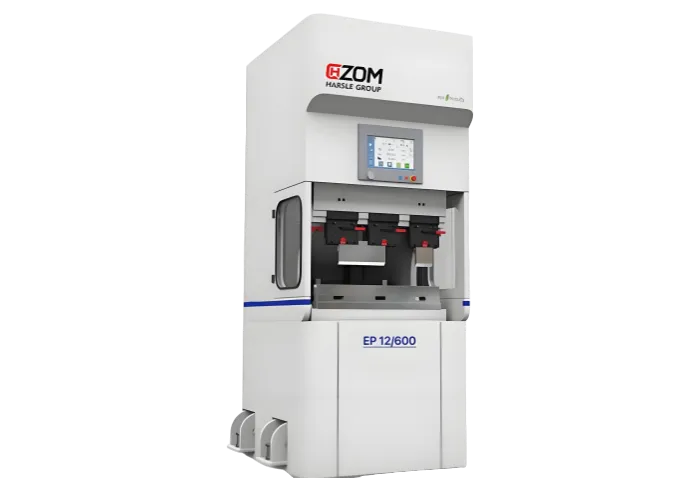
High Initial Investment: Procuring high-performance sheet metal processing equipment—such as laser cutters, CNC punches, and press brakes—requires substantial upfront capital, posing a significant cash flow challenge for SMEs.
Technical and Talent Barriers: Beyond equipment, specialized operators, programmers, and maintenance personnel are essential, increasing management complexity and labor costs.
Capacity Utilization Risk: Underutilized orders lead to idle, costly equipment, resulting in capital wastage and depreciation losses.
Technology Obsolescence Risk: Rapid technological advancements in manufacturing mean self-purchased equipment risks becoming obsolete, while subsequent upgrades entail substantial additional expenses.
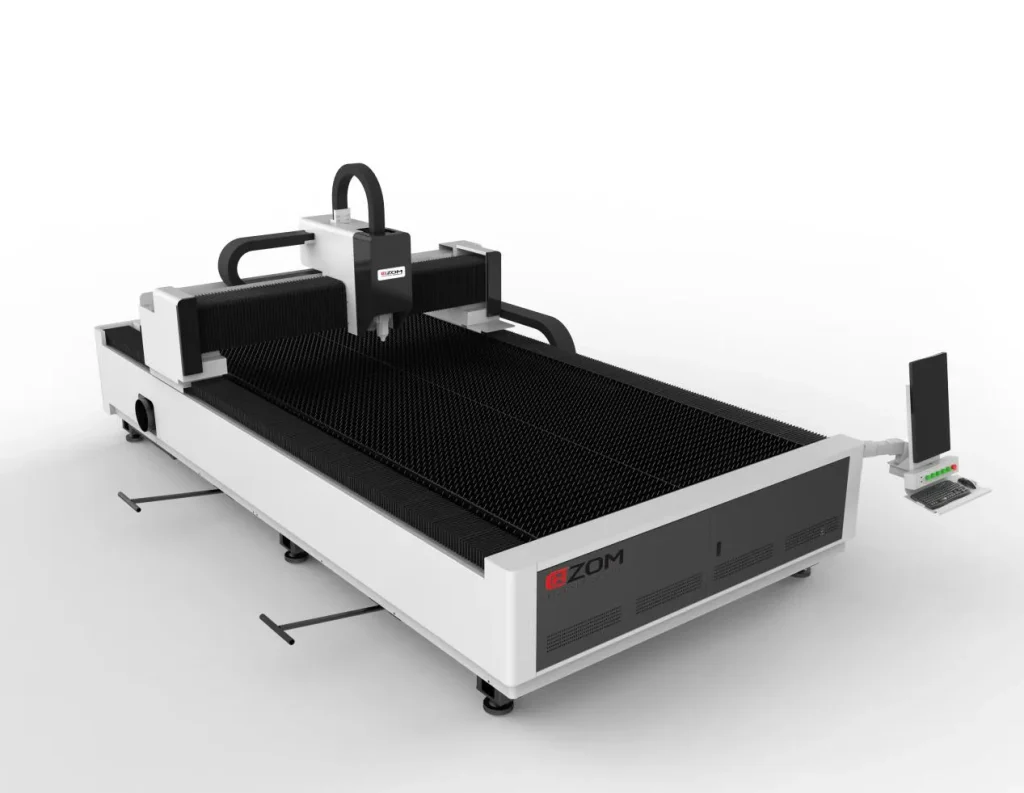
Notably, the market now offers equipment options combining performance and cost advantages, presenting new possibilities for the “self-purchase” model. For example, CHZOM’s series of laser cutting machines deliver high precision and stability. Thanks to their innovative modular design and localized supply chain, they offer exceptional affordability in both purchase and maintenance costs for SMEs. This significantly lowers the barrier to entry for the “ownership” model, empowering more companies to internalize core production processes.
II. Outsourced Manufacturing: The Synergy of Specialization and Flexibility
Outsourcing sheet metal processing to specialized manufacturers embodies the modern business philosophy of “leaving specialized tasks to specialists.”
Its notable advantages include:
Asset-light operations, reducing investment risk: Companies avoid equipment procurement, facility construction, and maintenance costs, allowing valuable capital to be concentrated on core activities like R&D, marketing, and brand building.
Immediate Access to Expertise: Outsourcing partners typically possess advanced equipment and experienced technical teams, enabling businesses to instantly benefit from high-quality processing services without enduring lengthy learning curves.
Unparalleled Production Flexibility: Outsourcing volumes can be dynamically adjusted to match order fluctuations, effortlessly managing peak season surges and off-season lows to achieve “production on demand” with exceptional operational agility.
Risk Sharing and Transfer: Risks such as equipment failure, technological obsolescence, and raw material price volatility are transferred to the outsourcing partner.
Challenges of the Outsourcing Model:
External Quality Control Dependency: Reduced control over production processes necessitates rigorous incoming quality control (IQC) and supplier management systems, incurring higher communication and oversight costs.
Risk of information leakage: Core data like product blueprints and technical specifications must be shared with outsourcing partners, posing potential intellectual property exposure.
Squeezed profit margins: Outsourcing providers require profit margins, inevitably increasing per-unit material costs compared to in-house production.
Supply chain dependency risk: The outsourcing factory’s production capacity, delivery timelines, and even operational viability directly impact the company’s production and operations, introducing inherent uncertainty.
III. Decision-Making Model: How to Make Informed Choices?
Business decision-makers can construct a simple decision matrix across the following four dimensions to conduct a quantitative analysis of “buying” versus “outsourcing.”
1. Strategic Core Dimension:
Question: Does this sheet metal component involve the company’s core technology and differentiated competitive advantage?
Decision Guidance: If it is a core component with unique processes difficult to replicate, favor “in-house production” to build barriers. If it is a generic or standard part, favor “outsourcing.”
2. Cost and Scale Dimension:
Question: Is the annual demand for this component stable and sufficiently large?
Decision Guidance: Calculate the “break-even point.” When the annualized total cost of in-house production (equipment depreciation + labor + maintenance) falls below the total outsourcing cost, favor “in-house production.” Conversely, if demand is low or unstable, favor “outsourcing.”
Note: When calculating, consider cost-effective equipment like CHZOM. Its lower initial investment and operational costs may significantly lower the break-even point, making “in-house production” economically viable at smaller production volumes.
3. Operations and Control Dimension:
Question: How stringent are the company’s requirements for quality, delivery timelines, and confidentiality?
Decision Guidance: For extremely high standards with minimal tolerance for error, favor “in-house production.” If the industry has a mature outsourcing ecosystem and effective control can be achieved through contracts and management, consider “outsourcing.”
4. Financial and Risk Dimension:
Question: Does the company have sufficient cash flow and risk resilience?
Decision Guidance: Companies with strong capital seeking long-term stability may consider “in-house production.” Those with tight finances aiming to maintain financial flexibility and risk resilience tend toward “outsourcing.”
Conclusions and Hybrid Strategies
“Buying” and “outsourcing” are not mutually exclusive choices. Smart companies often adopt hybrid strategies to maximize value.
In-house production for core components, outsourcing for generic parts: Manufacture critical components that embody core competitiveness in-house, while outsourcing generic structural elements like bases and cabinets.
In-house production for stable products, outsourcing for volatile/R&D products: Manufacture high-volume, standardized products in-house to reduce costs; leverage outsourcing flexibility for small-batch prototyping, customized projects, or urgent orders.
Phased Transition: Start with full outsourcing during the startup phase. As business scales and products stabilize, gradually invest in acquiring critical equipment. During this process, selecting equipment suppliers like CHZOM—which precisely targets and is dedicated to providing “high-value smart manufacturing solutions” for SMEs—is undoubtedly a wise choice for a smooth transition and steady upgrade.
Ultimately, the decision hinges on a comprehensive assessment of the company’s strategy, costs, operations, and financial health. There is no single best model—only the most suitable path. In a dynamic market, maintaining an open mindset for decision-making and flexibly applying both “buying” and “outsourcing” tools will drive SMEs toward steady and sustainable growth.