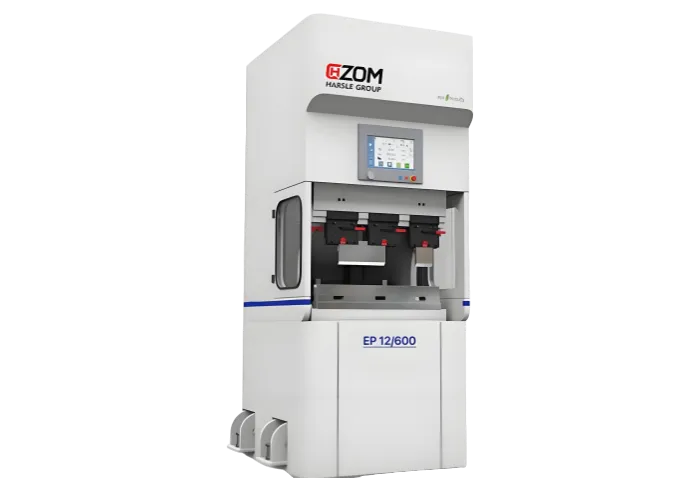
With the continuous evolution of precision manufacturing and sustainable production, electric press brakes have become an increasingly important solution in modern sheet metal fabrication. Also referred to as servo electric press brakes, these machines replace traditional hydraulic systems with servo-driven mechanical transmission, offering higher accuracy, lower energy consumption, and a cleaner working environment.
This article provides a comprehensive overview of electric press brake technology, including machine structure, working principles, application scenarios, advantages and limitations, and a comparison of leading models on the market.
What Is an Electric Press Brake?

An electric press brake is a CNC-controlled bending machine that uses servo motors to drive the ram through mechanical components such as ball screws. Unlike hydraulic press brakes, which rely on oil pressure generated by pumps and valves, electric press brakes convert electrical energy directly into controlled mechanical motion.
This fundamental difference leads to significantly improved positioning accuracy and repeatability. Because there is no hydraulic oil involved, issues such as oil leakage, pressure instability, and temperature-related performance variation are completely eliminated. As a result, electric press brakes deliver consistent bending accuracy from the first part to the last, making them particularly suitable for precision-oriented production.
Electric press brakes are commonly used in small electric press brake configurations and compact CNC systems, where space efficiency and energy savings are critical considerations.
Main Structural Components of an Electric Press Brake
Although designs may vary slightly among manufacturers, most electric press brakes share the following core components.
1. Frame (Machine Body)

The frame forms the backbone of the press brake, supporting all major components and absorbing bending forces. It is typically fabricated from high-strength steel and stress-relieved to ensure long-term rigidity and dimensional stability.
A rigid frame is essential for maintaining bending accuracy, especially in high-precision applications.
2. Ram (Slide)

The ram, also known as the slide, is responsible for carrying the upper tool and executing the bending motion. In electric press brakes, the ram is driven directly by servo motors, allowing precise vertical movement with fast response and excellent repeatability. This servo-driven design ensures consistent bending angles without the drift commonly associated with hydraulic systems.
3. Axes System

The axis system is another critical component. Each axis, including ram movement and backgauge positioning, is independently controlled by servo motors. This enables accurate synchronization between different machine movements and allows complex bending sequences to be executed with high precision.
4. Tooling System (Punch and Die)

Electric press brakes use standard upper punches and lower dies to perform bending operations. Tool compatibility is often designed to support industry-standard tooling systems, allowing flexible customization.
Precision tooling, combined with servo-driven motion, ensures consistent bending angles and surface quality.
5. Ball Screw and Linear Guide System

Ball screws and linear guide systems play a central role in achieving the machine’s precision. Servo motor torque is transmitted through ball screws, converting rotational motion into smooth and accurate linear movement of the ram. Linear guides stabilize this movement, minimizing friction and wear while maintaining consistent alignment throughout the bending cycle.
6. Electrical Components

The electrical system includes servo motors, drives, encoders, control cabinets, and safety circuits. These components work together to provide real-time feedback and ensure accurate execution of CNC commands.
7. Foot Pedal

The foot pedal is the primary operator input device, allowing hands-free control of bending cycles. It enables operators to start, pause, or stop operations safely and efficiently.
8. Fast Clamping System

Fast clamping systems are commonly integrated into electric press brakes to reduce tool change time. This feature is particularly valuable in small-batch or high-mix production environments where frequent tool changes are required.
9. CNC Controller

At the core of the machine is the CNC controller, which manages ram positioning, bending angle control, speed regulation, and backgauge movement. Modern controllers also support program simulation, error compensation, and user-friendly interfaces, making operation more intuitive and efficient.
Working Principle of an Electric Press Brake
An electric press brake operates by converting electrical energy into mechanical motion through servo motors and ball screws.
- The servo motor rotates based on CNC instructions.
- The rotation drives the ball screw mechanism.
- Linear motion moves the ram up or down with high precision.
- Encoders provide real-time feedback to the CNC system.
- The controller continuously adjusts position and speed to ensure accurate bending angles and repeatability.
Because there is no hydraulic oil system, electric press brakes avoid issues such as oil leakage, pressure fluctuation, and temperature-related accuracy loss.
Typical Applications of Electric Press Brakes
Electric press brakes are widely used in industries requiring precision and clean production environments, including:
- Precision sheet metal fabrication (electronics enclosures, cabinets)
- Medical equipment manufacturing
- Home appliance components
- Laboratory equipment
- Small metal parts production
- R&D workshops and small production lines
Their compact size and efficiency make small brake press solutions particularly attractive for space-constrained workshops.
Advantages and Limitations of Electric Press Brakes
1. Advantages
- High Precision and Repeatability: Servo-driven systems provide extremely accurate positioning and consistent bending results.
- Energy Efficiency: Electric press brakes consume power only during movement, unlike hydraulic systems that run pumps continuously.
- Environmentally Friendly: No hydraulic oil means zero oil leakage and cleaner factory conditions.
- Low Noise and Maintenance: Quiet operation and fewer mechanical components reduce maintenance requirements.
- Fast Response and High Productivity: Rapid acceleration and deceleration improve cycle times.
2. Limitations
- Higher Initial Investment: Electric press brakes generally have higher upfront costs than traditional hydraulic machines.
- Tonnage Constraints: They may not be ideal for extremely thick plates or ultra-high-tonnage bending applications.
Top 5 Popular Electric Press Brake Models
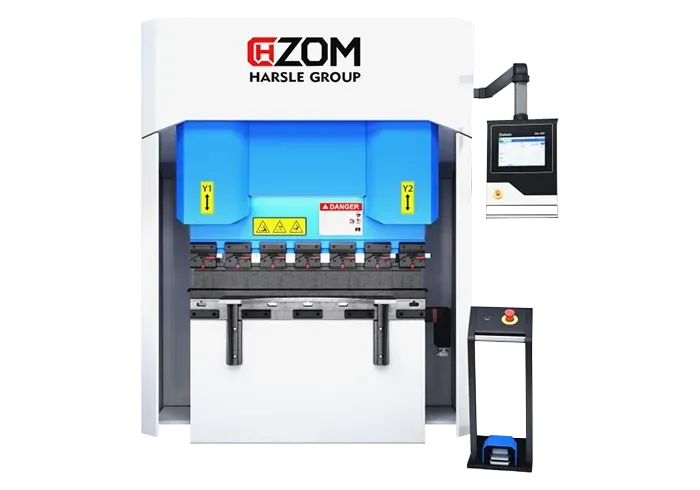
- Fully electric drive for maximum energy efficiency
- High-precision bending for premium sheet metal parts
- Ideal for small-batch and high-accuracy applications
- Higher-end positioning with tonnage limits depending on model
CHZOM electric press brakes are designed for manufacturers prioritizing precision, sustainability, and modern production standards.
2. ACCURL Servo-Electric Press Brake
- Fast response and low energy consumption
- Shorter cycle times compared with hydraulic machines
- Reliable for medium-duty applications
- Less suitable for extremely heavy or oversized workpieces

3. SafanDarley E-Brake Series

- Well-known global brand with a complete electric lineup
- Available from 35 to 300 tons with multiple working lengths
- Advanced automation and control options
- Higher cost, especially for entry-level users
4. Boschert ElectroBend Series
- Dual linear encoders and rigid O-frame design
- Emphasis on precision and low maintenance
- Fast bending cycles
- Limited availability for very large tonnage models

5. BLM Pro Bend Fully Electric Press Brake

- Direct-drive electric technology
- Suitable for simple and complex bending tasks
- Tonnage range from 22 to 310 tons
- Not optimized for extreme heavy-duty applications
Conclusion
Electric press brakes represent a major technological shift in the sheet metal fabrication industry. With their high precision, low energy consumption, quiet operation, and minimal maintenance, they are increasingly replacing hydraulic systems in modern factories.
For manufacturers seeking sustainable production, consistent quality, and advanced CNC control, investing in a servo electric press brake is a strategic decision. Brands such as CHZOM offer fully electric press brake solutions that help companies improve productivity, reduce operating costs, and strengthen their competitive advantage in high-end metal fabrication.
For detailed information on press brakes or customized solutions, contact CHZOM’s professional technical team for personalized support.