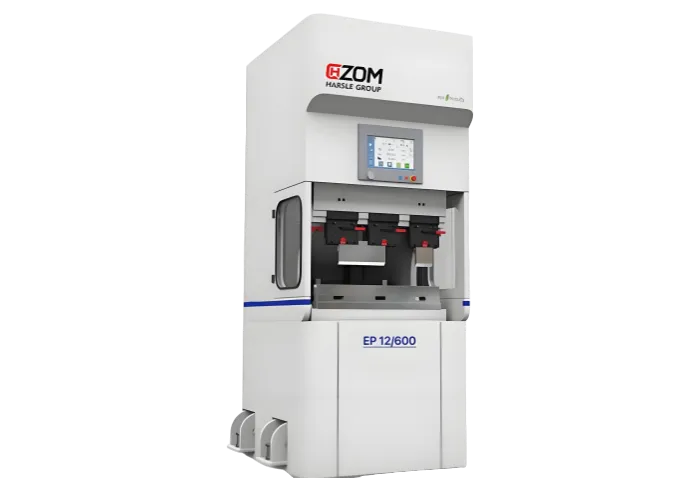
What Is a Punch Press Machine?
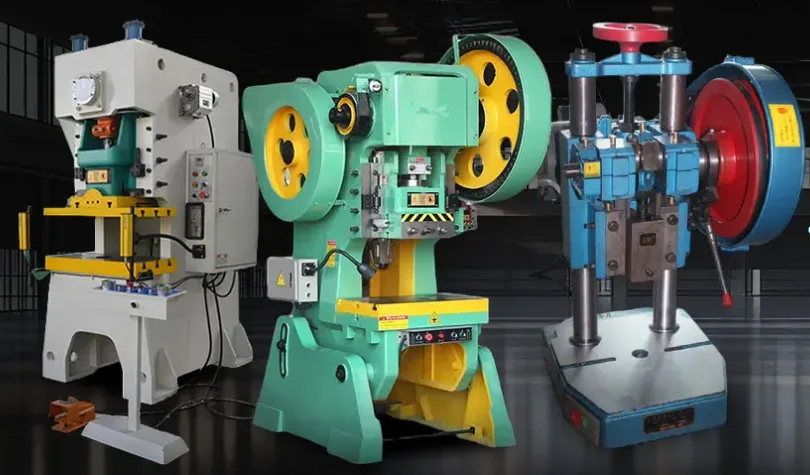
A punch press machine is a mechanical device that uses pressure to stamp and form metal sheets. It is a key machine tool in the sheet metal processing industry, relying on the cooperation of upper and lower molds to exert strong pressure on the metal material, so as to complete a variety of processing technologies such as cutting, punching, stretching, and flanging.
Main Structure of a Punch Press Machine
| Components | Main Functions |
| Frame | The supporting structure of the whole machine, which bears the huge stamping force generated during the operation to ensure the stability of the equipment |
| Slide / Ram | The core moving part that drives the upper mold to move up and down, and completes the stamping action by cooperating with the lower mold |
| Bolster / Bed | Used to install and fix the lower mold, bear the reaction force during stamping, and provide a stable processing platform for the workpiece |
| Clutch & Brake | Control the start and stop of the slide block, ensure the accurate positioning of the mold, and avoid safety accidents caused by misoperation |
| Drive Mechanism | Transmit the power of the motor to the slide block, and realize the adjustment of stamping speed and force through structures such as crankshafts and flywheels |
| Die Set | The core part to realize stamping and forming, different molds can process workpieces of different shapes and sizes |
| Control System | Realize the automation control of the equipment, set processing parameters, and provide safety protection functions such as emergency stop |
| Lubrication System | Reduce the friction between moving parts, lower the temperature of the equipment during operation, and extend the service life of the machine |
| Feeding System | Realize the automatic feeding and discharging of workpieces, improve production efficiency, and reduce the labor intensity of operators |
How Does a Punch Press Work?
1. Energy Storage Stage
The motor drives the flywheel to rotate at a high speed, and the flywheel stores kinetic energy, which provides a stable power source for the stamping process.
2. Power Transmission Stage
The clutch connects the flywheel and the crankshaft mechanism, and transmits the stored kinetic energy to the slide block, driving the slide block to move downward.
3. Stamping Forming Stage
The slide/ram drives the upper mold to move downward, and cooperates with the lower mold fixed on the workbench to exert pressure on the metal sheet placed between the two molds, so as to complete processing operations such as punching, cutting, or stretching.
4. Cycle Preparation Stage
After the stamping is completed, the clutch is disconnected, the brake system is activated to control the slide/ram to return to the initial position, and the feeding system sends the next workpiece to the processing area, waiting for the start of the next stamping cycle.
This cyclic working mode ensures that the punch press machine can carry out high-efficiency batch processing, and the precise cooperation of each component guarantees the processing accuracy of the workpiece.
Common Punching Machine Types
1. Mechanical Punch Press

Mechanical punch presses use flywheels and crankshafts for power transmission. They have the advantages of fast punching speed, compact structure, and low equipment cost, and are suitable for high-volume production of simple parts. For example, the JB23 series mechanical punch press launched by CHZOM has a tonnage range of 6.3T-160T, which is widely used in sheet metal punching, blanking, and shearing processes. However, this type of machine also has disadvantages such as high noise and large energy consumption during operation, and it is difficult to adjust the stamping force flexibly.
2. Hydraulic Punch Press

Hydraulic punch presses rely on hydraulic cylinders to generate pressure. The biggest advantage is that the pressure output is stable and adjustable, which is suitable for processing thick metal plates or large-size workpieces with complex shapes. The hydraulic system can provide a larger stamping force, and the stamping process is more stable, which can effectively reduce the deformation of the workpiece. However, the hydraulic punch press has a relatively slow working speed and high maintenance costs. The sealing performance of the hydraulic system needs to be checked regularly to avoid oil leakage problems.
3. CNC Punch Press
CNC punch presses integrate computer numerical control technology, with high automation and processing precision. The equipment is equipped with a rotating turret that can hold multiple sets of molds, which can realize quick mold change without stopping the machine, and is suitable for processing complex and diverse parts. CNC punch presses can realize automatic programming and processing, greatly reducing the error caused by manual operation, and improving the consistency of product quality. However, the equipment cost of CNC punch presses is relatively high, and it requires professional operators to carry out programming and debugging, which is more suitable for enterprises with high precision requirements and diversified product types.
Advantages and Disadvantages of Punch Press Machines
1. Advantages
- High-speed and High-efficiency: The mechanical punch press can achieve high-frequency stamping, which is suitable for large-scale mass production, and can significantly shorten the production cycle of products.
- Strong Versatility: By replacing different molds, the same punch press machine can complete multiple processing processes such as punching, cutting, stretching, and flanging, and can process various metal materials to meet the processing needs of different workpieces.
- Stable and Reliable Operation: The mature mechanical structure and control system ensure the stability of the equipment during operation, and the processed workpieces have high dimensional accuracy and good consistency.
2. Disadvantages
- High Safety Requirements: The punch press machine involves high-speed moving parts. If the operation is improper or the safety protection measures are not in place, it is easy to cause safety accidents such as pinching and injury.
- High Die Set Cost: The mold is the core consumable of the punch press machine. The design and manufacturing cost of high-precision molds is relatively high, which will increase the production cost of enterprises to a certain extent.
Typical Applications of Punch Press Machines
- Home Appliance Industry: Used to process home appliance shells, such as the shell of air conditioners, refrigerators, and washing machines, as well as internal structural parts, realizing the punching and forming of sheet metal parts.
- Automotive Industry: It is used to produce automotive parts such as brackets, panels, and heat dissipation holes. The high precision and high efficiency of the punch press machine can meet the mass production needs of the automotive industry.
- Electronics Industry: Process the casings and internal components of electronic equipment such as computers, mobile phones, and printers, and complete the precise punching of small and delicate parts.
- Hardware Manufacturing Industry: Used to produce various industrial hardware, metal signs, and cabinet shells, realizing the diversified processing of sheet metal parts.
How to Choose the Right Punch Press Machine?
1. Appropriate Tonnage
The tonnage of the punch press machine determines the maximum stamping force it can provide. For thin metal sheets such as aluminum plates, small-tonnage machines can be selected; for thick steel plates or high-strength alloy materials, large-tonnage hydraulic or mechanical punch presses need to be selected.
2. Production Scale
If it is large-scale mass production of simple parts, a mechanical punch press with high cost performance can be selected; if it is necessary to process complex parts with high precision, a CNC punch press should be considered; if processing thick plates or large workpieces, a hydraulic punch press is a better choice.
3. Automation and Intelligence Needs
For enterprises with high labor costs and pursuing automated production lines, they can choose punch press machines equipped with automatic feeding systems, manipulators, and other auxiliary equipment to realize unmanned operation of the processing process.
4. Energy Consumption and Maintenance Costs
When purchasing equipment, in addition to the one-time purchase cost, the long-term energy consumption and maintenance costs of the equipment should also be considered.
5. Reliable Brands and Perfect After-sales Service
A brand with strong strength can provide high-quality equipment and perfect after-sales service. For example, CHZOM, as a professional punch press machine manufacturer with 14 years of experience, provides customers with customized solutions, on-site installation and debugging, and 24-hour remote diagnostic support, which can solve the worries of enterprises in the use of equipment.
Why Choose CHZOM Punch Press Machine?
As an integrated industrial and trade enterprise established in 2010, CHZOM has been committed to the R&D and production of high-precision punch press machines.
CHZOM provides a variety of types of punch press machines, including JH21 series pneumatic punch presses, JB23 series mechanical punch presses, JB04 series desktop punch presses, and hydraulic press machines covering a tonnage range from 0.5T to 3000T, which can meet the processing needs of different industries and workpieces.
In addition, CHZOM also provides customized services. According to the specific production needs of customers, it can customize the tonnage, configuration, and automation level of the equipment, and provide turnkey industrial solutions including production line design and intelligent manufacturing system integration.
Conclusion
The punch press machine is a key equipment in the sheet metal processing industry. Choosing the right punch press machine is crucial to improving production efficiency, ensuring product quality, and reducing production costs.
CHZOM, as a professional punch press machine manufacturer, provides customers with high-quality products and comprehensive services, and is an ideal partner for enterprises to carry out sheet metal processing.