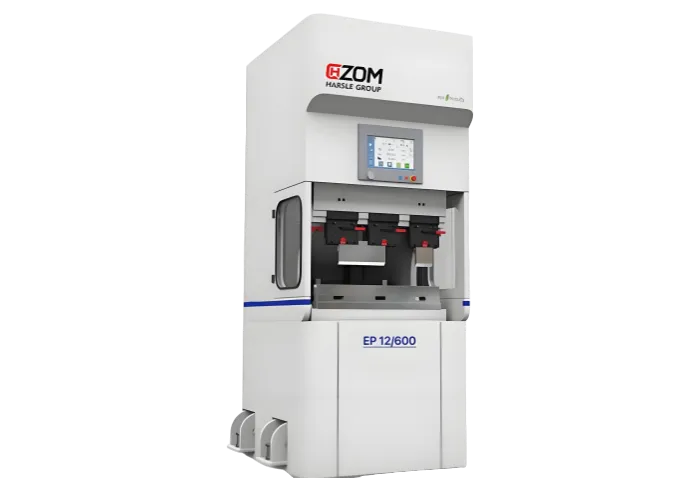
Whether you are expanding a high-volume production line or setting up a precision-focused boutique shop, choosing between a CNC hydraulic press brake and a pure electric press brake machine will dictate your operational costs and output quality for the next decade.
At CHZOM, we understand that maximizing Return on Investment (ROI) requires a deep dive into the mechanics, performance metrics, and long-term sustainability of each technology. This guide provides a comprehensive breakdown to help you make an informed decision.
1. Understanding the Core Technologies
Before comparing performance, it is essential to understand how these press brake machines translate energy into precision bends.
1) CNC Hydraulic Press Brake
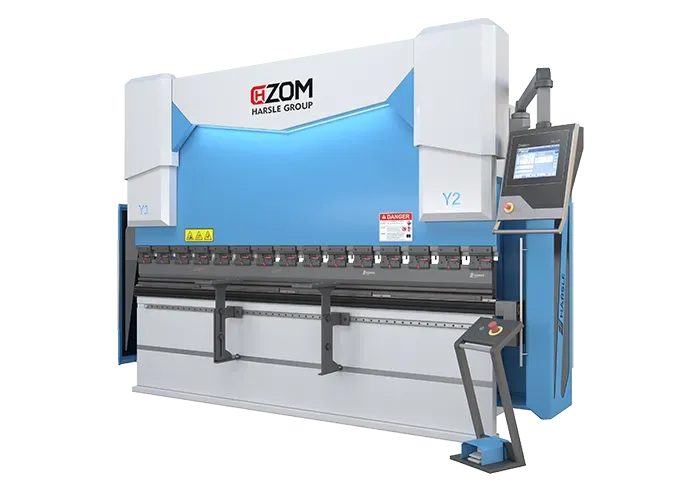
The hydraulic press brake is the seasoned veteran of the industry. It operates using an oil pump to generate high pressure, which is then transferred through hydraulic cylinders to drive the ram (slider).
- The Logic: Fluid power allows for massive force generation within a relatively compact footprint.
- The Strength: It is the undisputed king of heavy-duty applications, capable of handling high-tonnage tasks with relentless consistency.
2) Pure Electric Press Brake

The pure electric press brake machine represents the cutting edge of “Green Manufacturing.” Instead of oil and valves, it utilizes high-torque servo motors driving a heavy-duty ball screw or a belt-and-pulley system.
- The Logic: It converts electrical energy directly into mechanical motion.
- The Strength: Without the “middleman” of hydraulic fluid, the response time is instantaneous, and the movement is incredibly surgical.
2. Key Differences: Hydraulic vs. Pure Electric Press Brakes
1) Precision and Long-Term Stability
When we talk about precision, we are discussing the machine’s ability to repeat a bend within microns over thousands of cycles.
- Electric Press Brake: Precision is the native language of the electric machine. Because it eliminates hydraulic oil, it also eliminates the “thermal drift” caused by oil heating up during a shift. As oil temperature rises, its viscosity changes, which can subtly affect the ram’s positioning.
- CNC Hydraulic Press Brake: While historically viewed as less precise than electric, modern high-end CNC hydraulic systems (like those offered by CHZOM) utilize advanced proportional valves and oil temperature compensation. For 90% of standard sheet metal applications, the precision of a modern hydraulic brake is more than sufficient.
2) Processing Speed & Cycle Time
- Electric Advantage: Agility. For small parts and complex, multi-bend sequences, the electric press brake is significantly faster. The servo motor can accelerate and decelerate the ram almost instantly. The “approach” and “return” speeds are optimized for high-frequency flicking of parts.
- Hydraulic Advantage: Power Strokes. While the hydraulic ram might move slower during the approach, it offers a “steady hand” during the actual bending phase, especially for long workpieces. For heavy plate processing, the sheer force of hydraulics ensures a smooth, uninterrupted stroke that electric motors might struggle to maintain under extreme resistance.
3) Power Capacity and Work Range
| Feature | CNC Hydraulic Press Brake | Pure Electric Press Brake |
| Tonnage Range | 30 tons to 3,000+ tons | Generally 20 to 100 tons |
| Max Sheet Thickness | Virtually unlimited (with right tonnage) | Optimized for thin to mid-gauge |
| Bed Length | Up to 12 meters or more | Typically capped at 3 or 4 meters |
If your shop processes 10mm+ carbon steel plates or massive structural beams, the hydraulic press brake is your only viable path. If you are folding delicate electronic enclosures or medical-grade stainless steel, the electric machine is your specialist.
4) Maintenance and Environmental Impact
- While the electric press brake is often marketed as “maintenance-free,” no industrial machine is truly exempt from upkeep; however, the absence of a hydraulic circuit offers several distinct advantages. Specifically, the mechanical drive system ensures there are no oil leaks or messy floor spills to contaminate the workspace. Operators also benefit from a simplified maintenance schedule because there are no hydraulic filters to change or expensive hydraulic pump overhauls to budget for over the machine’s lifespan. Furthermore, the technology enables whisper-quiet operation because noise is only generated during the actual bending process, significantly improving the factory floor environment.
- The CNC hydraulic press brake does require oil changes and seal inspections. However, because the technology has been the global standard for 50 years, the supply chain for parts is vast. Any qualified technician can service a hydraulic unit, and spare parts are generally more affordable than high-end proprietary servo-drive components.
5) Energy Efficiency
- Electric Efficiency: These machines only consume significant power when the ram is moving. During standby, consumption is negligible. They typically boast an energy utilization rate of over 95%.
- Hydraulic Evolution: Older hydraulic machines were energy hogs because the main motor ran constantly. However, CHZOM’s servo-hydraulic systems have changed the game. By using a servo motor to drive the pump, the machine only uses power on demand, closing the efficiency gap with pure electric models significantly.
6) Calculating Your ROI
- Initial Cost: A pure electric press brake usually commands a 20%–40% premium over a comparable hydraulic model.
- Operating Costs: You must calculate the savings in electricity and the lack of oil disposal costs.
- Throughput: If the electric machine allows you to produce 30% more parts per shift due to speed, the “payback period” (ROI) may be as short as 18–24 months.
3. Selection Guide: Which One Should You Choose?
1) What Is My Primary Material?
If it’s thin aluminum or stainless steel requiring high-precision aesthetics, go Electric. If it’s heavy structural steel, go Hydraulic.
2) What Is My Volume?
For high-speed, high-volume small parts, Electric wins. For varied, heavy-duty job shop work, Hydraulic is more versatile.
3) What Are My Local Regulations?
In regions with high electricity costs or strict “Green” manufacturing subsidies, the electric press brake machine pays for itself faster.
4) What Is My Budget?
If you need the most “bending force per dollar” for an initial investment, the CNC hydraulic press brake remains the cost-effective champion.
Conclusion: Partnering with CHZOM for Your Success
There is no “best” technology—only the technology that fits your specific production flow. At CHZOM, we pride ourselves on providing a diverse portfolio of both high-performance CNC hydraulic press brakes and ultra-efficient pure electric press brakes.
Our engineering team is ready to analyze your part drawings and production goals to recommend the solution that will truly maximize your ROI.
Ready to upgrade your shop floor?
Contact CHZOM today for a customized quote or a technical consultation on our latest bending solutions.