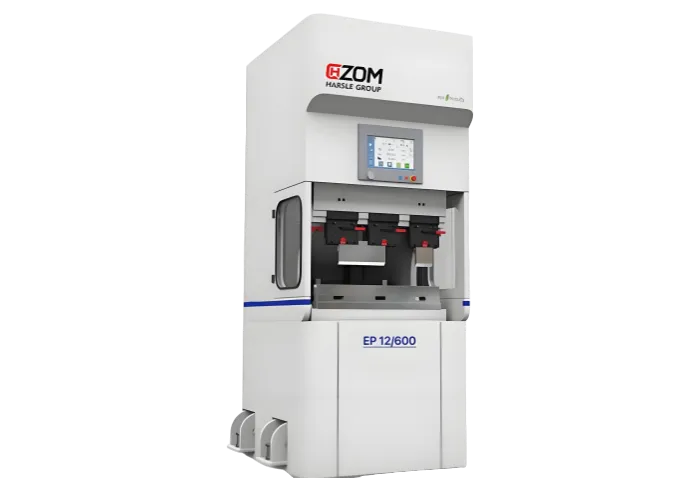
In modern automotive manufacturing, precision and efficiency are critical. Deep drawing is a key forming process that converts flat sheet metal into deep, hollow components without compromising strength. It is widely used for parts such as chassis components and brake housings, powered by the hydraulic presses for precise and controlled forming.
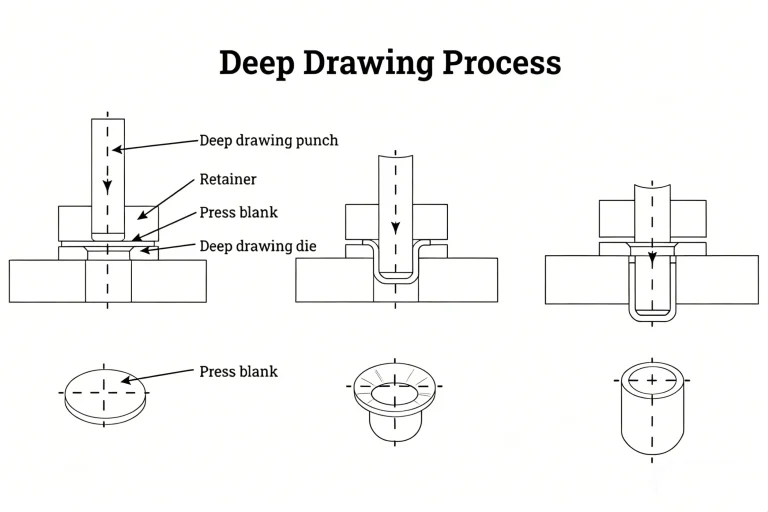
1. What is a Deep Drawing Hydraulic Press?
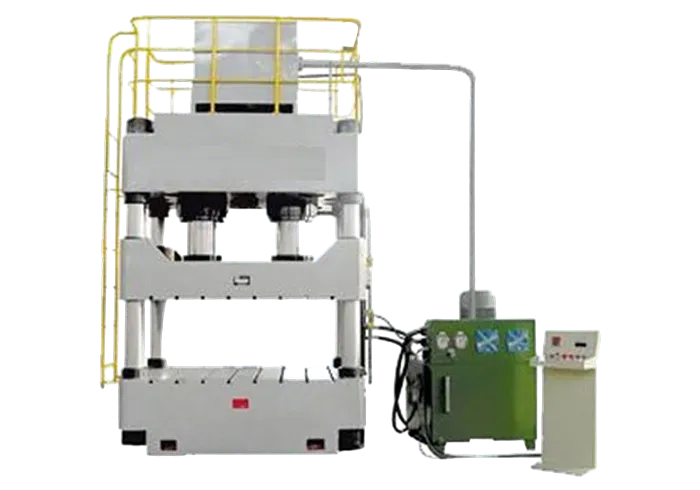
A deep drawing hydraulic press is typically built using a 4 column hydraulic press structure, known for its stability, rigidity, and uniform load distribution.
1) Structure and Working Mechanism
The machine operates through a coordinated hydraulic cylinder system, including a main drawing cylinder that provides the primary forming force and a blank holder (binder) cylinder that regulates material flow. This multi-cylinder configuration ensures smooth sheet metal drawing into the die while maintaining a stable balance between applied pressure and material deformation.
2) Controlled Pressure and Stroke
One of the key advantages of hydraulic presses is their ability to maintain constant pressure throughout the entire stroke while offering fully adjustable stroke length and speed. This high level of process control helps minimize common forming defects such as material tearing and surface wrinkling, ensuring more stable and reliable forming quality.
2. Core Benefits of Deep Drawing Hydraulic Presses
1) Superior Stroke and Pressure Control
Unlike mechanical presses, hydraulic systems can maintain maximum force at any point during the stroke. This allows for more consistent forming, especially in deep cavity applications.
2) Adjustable Blank Holder Force
The dynamic adjustment of blank holder force improves material flow control, ensuring a more stable forming process. It reduces defects in complex geometries and enhances product quality, making it essential for high-precision automotive components.
3) Material Versatility
Deep drawing hydraulic presses can handle a wide range of materials, including stainless steel, high-strength steel, and aluminum alloys. This versatility supports modern automotive trends such as lightweight design and multi-material construction.
4) Enhanced Forming Depth Capability
Hydraulic presses deliver deeper draws and form complex shapes in fewer steps than conventional equipment.
5) Improved Tool Protection
Hydraulic systems provide built-in overload protection and smoother force application, ensuring consistent pressure without sudden mechanical shocks. This extends tool lifespan, reduces wear and maintenance costs, and improves operational reliability by minimizing downtime.
3. Deep Drawing vs. Other Types of Presses
1) Deep Drawing Hydraulic Press vs. Stamping Hydraulic Press
A standard stamping hydraulic press is mainly used for punching, cutting, and shallow forming operations. In contrast, deep drawing presses are designed for more demanding forming tasks and offer several key advantages:
- Longer stroke length enables deeper forming and better adaptability to complex geometries.
- Dedicated cushion (bottom pad) systems provide stable support during the drawing process, improving forming accuracy and part quality.
- Better control over material flow reduces defects and ensures more consistent results in deep forming applications.
These features make deep drawing presses more suitable for producing deep-drawn and structurally complex components.
2) Deep Drawing Hydraulic Press vs. Mechanical Press
A mechanical press relies on a crank-driven system, which results in limited process flexibility:
- Maximum force is only available at the bottom of the stroke, restricting forming control during the cycle.
- Stroke length and operating speed are less flexible, making it harder to adapt to complex forming requirements.
In contrast, hydraulic presses offer greater process control:
- Full stroke force control allows consistent pressure throughout the entire forming process.
- Adjustable speed enables fast approach and controlled slow forming for improved precision.
- Enhanced safety and mold protection reduce the risk of tool damage during operation.
These advantages make hydraulic presses ideal for producing deep-drawn automotive components that require high precision and consistent quality.
4. Superiority in Automotive Component Manufacturing

1) Complex Forming Capability
Deep drawing hydraulic presses enable manufacturers to form complex automotive components in a single operation, reducing the need for welding and assembly. This leads to higher structural strength and improved durability, making them well-suited for high-performance automotive applications.
2) Consistent Part Quality
With advanced hydraulic and servo control systems, force and motion can be precisely repeated throughout the production process. This helps maintain tight and consistent dimensional tolerances, ensuring reliable product quality in high-volume manufacturing.
3) Wide Range of Applications
Deep drawing hydraulic presses are widely used in the manufacturing of automotive components such as chassis parts, brake housings, shock absorber covers, fuel tank shells, and structural reinforcements, supporting the production of high-precision and durable vehicle structures.
4) Cost Efficiency in Mass Production
Although hydraulic presses typically have longer cycle times, they help reduce or eliminate secondary processing, significantly lower defect rates, and improve overall material utilization. These advantages translate into higher production efficiency and better cost control, making them highly cost-effective for large-scale automotive manufacturing.
Conclusion
As the automotive industry continues to evolve toward higher performance, lighter materials, and greater precision, the deep drawing hydraulic presshas become an essential manufacturing solution. Its ability to deliver controlled force, adapt to complex geometries, and maintain consistent quality makes it a cornerstone of modern automotive component production.
CHZOM focuses on providing high-performance 4 column hydraulic press and advanced deep drawing solutions, helping global automotive manufacturers achieve superior efficiency and precision.